

Susan Jacob - Nutritionist
A Certified Nutritionist, Sports Nutritionist, Fertility, Maternal and Nutrigenomics Expert with over 12 years of experience, Susan Jacob leads SJ Nutrizione, empowering individuals and athletes to achieve sustainable health and peak performance through personalized, science-backed nutrition. Her areas of expertise include: Lifestyle Nutrition, Sports Nutrition,Holistic Nutrition and Medical Nutrition. Her motto lies in Transforming Lives through the power of food and nutrition.
Table of Contents:
- The Rise of Home Gym
- Bodyweight Training: Strength without Tools
- Dumbbells : Classic and Versatile
- Resistance Bands : Compact Yet Powerful
- The Overload Principle : Why Progression Matters
- The Balanced Verdict
- Community Takeaway
- References
The Rise of the Home Gym
From lockdowns to busy urban lifestyles, home workouts have become more than a trend; they’re a necessity. But a common question remains: Should you invest in dumbbells and resistance bands, or can bodyweight exercises alone deliver results? Each method has unique strengths and limitations in terms of strength gains, convenience, and long-term progression. Let’s break down the science so you can choose the best strategy for your fitness journey.
Bodyweight Training: Strength Without Tools
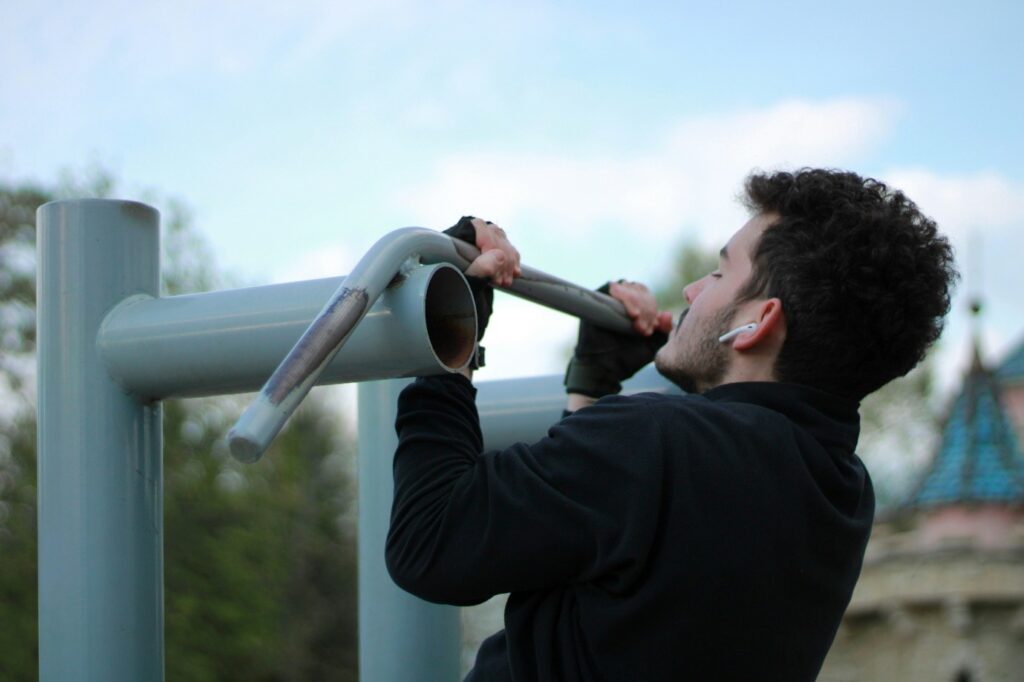
Bodyweight exercises like push-ups, squats, lunges, and planks are the oldest form of strength training. Their biggest advantage? Accessibility. You need no equipment, and workouts can be done anywhere.
Pros:
- No cost, no space requirements.
- Functional strength development using natural movement patterns.
- Scalable with variations (e.g., incline push-ups to one-arm push-ups).
Cons:
- Limited progressive overload (beyond a point, push-ups or squats stop being challenging).
- Harder to isolate muscles like biceps, deltoids, or hamstrings.
- May plateau if strength gains aren’t supplemented with resistance.
A review in the Journal of Strength and Conditioning Research concluded that bodyweight training improves muscular endurance and cardiovascular fitness, but strength and hypertrophy gains plateau without external resistance.
Dumbbells: Classic and Versatile
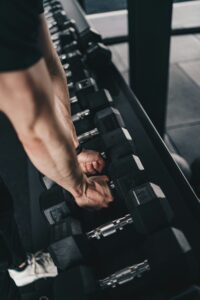
Dumbbells remain the gold standard for home strength training. From bicep curls to chest presses, they allow targeted muscle work and scalable progression.
Pros:
- Wide range of exercises for every muscle group.
- Adjustable load → consistent progressive overload.
- Improves both strength and hypertrophy (muscle growth).
Cons:
- Requires initial investment (₹2,000–10,000 for adjustable sets).
- Takes up more space than bands.
- Higher injury risk without proper technique.
A randomized trial in the European Journal of Applied Physiology found that dumbbell-based resistance training produced greater muscle hypertrophy in 12 weeks compared to bodyweight-only regimens. This makes dumbbells ideal for individuals seeking visible muscle growth at home.
Resistance Bands: Compact Yet Powerful
Resistance bands are often underestimated, but science shows they are highly effective. They provide variable resistance (more tension as they stretch), which recruits stabilizer muscles often missed in machine or free-weight training.
Pros:
- Inexpensive, portable, and space-efficient.
- Safe for beginners and seniors.
- Great for rehabilitation and joint-friendly workouts.
Cons:
- Hard to measure exact load (unlike dumbbells).
- Bands can wear out or snap with heavy use.
- Limited max resistance compared to free weights.
A study in SAGE Open Medicine found that resistance band training was equally practical as weight training for improving strength and functional capacity in older adults. This suggests bands are an excellent tool for longevity-focused training.
The Overload Principle: Why Progression Matters
Whether you use your bodyweight, dumbbells, or resistance bands, the key principle is progressive overload: gradually increasing the challenge to keep muscles adapting. Without it, fitness progress stalls.
- With bodyweight, progression comes from advanced variations (pistol squats, handstand push ups).
- With dumbbells, progression comes from increasing weight or reps.
- With resistance bands, progression occurs through the use of thicker bands or higher tension.
The American College of Sports Medicine (ACSM) recommends at least 2–3 strength training sessions per week with progressive overload to maximize muscle growth and endurance.
The Balanced Verdict
Should you invest in equipment or stick to bodyweight exercises?
- For Beginners & Budget-Conscious Individuals: Start with bodyweight and a basic resistance band set. Affordable, safe, and effective for building a foundation.
- For Muscle Growth & Strength Enthusiasts: Dumbbells are the best investment for consistent overload and hypertrophy.
- For Seniors or Space-Conscious Urban Living: Resistance bands offer a joint-friendly, portable solution without sacrificing results.
The ideal approach? Hybrid training. Combining bodyweight moves with dumbbells or bands creates variety, prevents plateaus, and delivers a complete fitness experience at home.
Community Takeaway
The home gym revolution is not about choosing one method over another. It’s about finding what fits your lifestyle, space, and goals. Whether you’re doing push ups on your living room floor, curling dumbbells, or pulling resistance bands, what matters most is consistency. The best workout is the one you can sustain, progress in, and enjoy.
Author :

Susan Jacob – Nutritionist
A Certified Nutritionist, Sports Nutritionist, Fertility , Maternal and Nutrigenomics Expert with over 12 years of experience, Susan Jacob leads SJ Nutrizione, empowering individuals and athletes to achieve sustainable health and peak performance through personalized, science-backed nutrition.
Her areas of expertise include: Lifestyle Nutrition, Sports Nutrition,Holistic Nutrition and Medical Nutrition. Her motto lies in Transforming Lives through the power of food and nutrition.
References
1) Calatayud J, et al. “Bench press and push-up at comparable levels of muscle activity results in similar strength gains.” Journal of Strength and Conditioning Research. 2015;29(1):246–253. 2) Schoenfeld BJ, et al. “Effects of resistance training frequency on measures of muscle hypertrophy: a systematic review and meta-analysis.” European Journal of Applied Physiology. 2016;116(11–12):2407–2418. 3) Colado JC, et al. “Strength training with elastic bands: practical recommendations.” SAGE Open Medicine. 2019;7:205031211983563. 4) American College of Sports Medicine. “ACSM’s guidelines for exercise testing and prescription.” 10th ed. 2021. 5) Peterson MD, et al. “Resistance exercise for muscular strength in older adults: a meta-analysis.” Ageing Research Reviews. 2010;9(3):226–237.